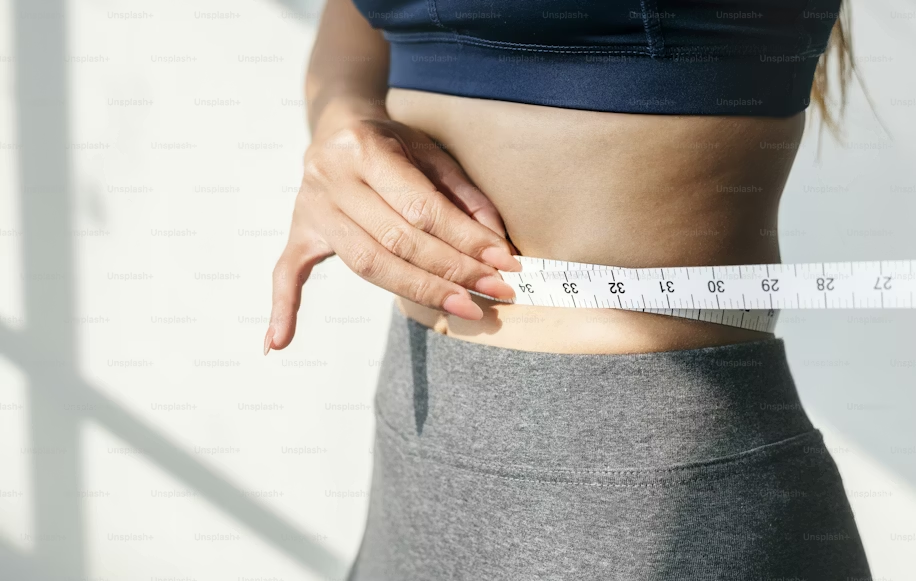
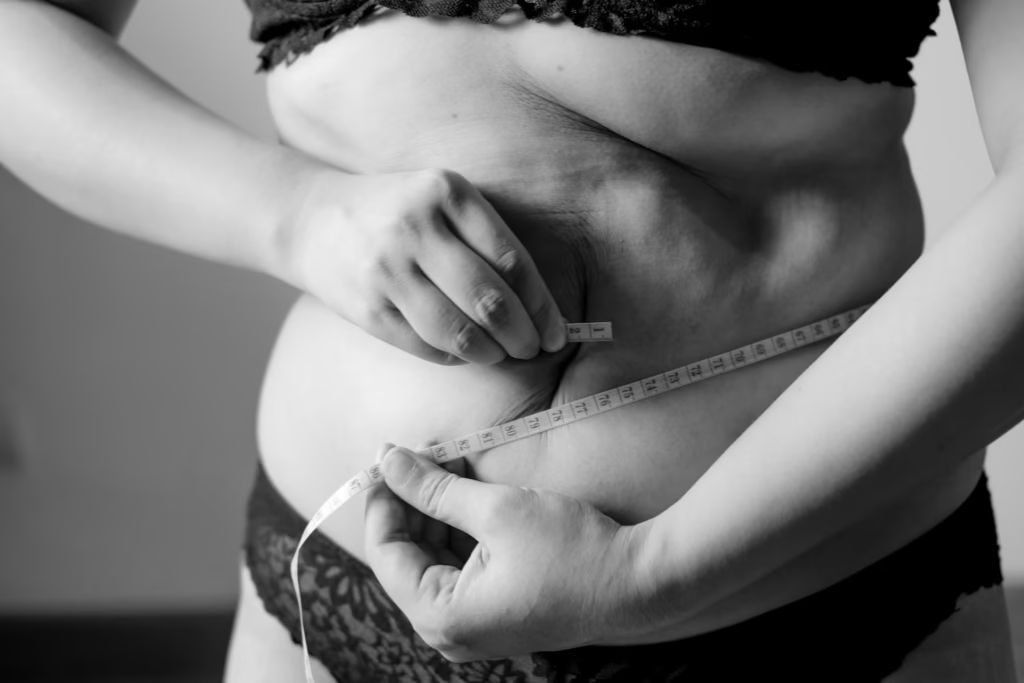
Learning how to calculate BMI for women involves the same formula used for men, but interpreting the result requires understanding female-specific factors like body composition, hormones, and life stages. Body Mass Index (BMI) is a standard screening tool that estimates body fat based on height and weight. This guide will walk you through the accurate calculation, explain what your number means for female health, and discuss crucial considerations often overlooked in generic BMI charts.
CALCULATE YOUR BMI WITH OVER PRO TOOL
While the BMI formula for women is mathematically identical, its application and implications can differ significantly due to physiological and hormonal variations. This article provides a comprehensive, female-focused perspective to help you use BMI as a more meaningful part of your health assessment.
What is BMI and Why is it Used for Women?
BMI (Body Mass Index) is a simple, non-invasive screening metric that correlates weight to height. For women, healthcare providers use it as an initial tool to assess potential health risks associated with being underweight, overweight, or obese. According to resources like the Centers for Disease Control and Prevention (CDC), it helps identify potential risks for conditions such as heart disease, type 2 diabetes, and certain cancers. However, it is a starting point, not a definitive diagnosis of health or body composition.
The Standard Formula: How to Calculate BMI for Women
The universal formula for calculating BMI is straightforward. You can use metric or imperial units.
1. Metric Formula (kilograms & meters):BMI = weight (kg) / [height (m)]²
Example: A woman who is 1.65m tall and weighs 63kg.
BMI = 63 / (1.65 x 1.65) = 63 / 2.7225 = 23.1
2. Imperial Formula (pounds & inches):BMI = [weight (lbs) / [height (in)]²] x 703
Example: A woman who is 5’5″ tall (65 inches) and weighs 140lbs.
BMI = [140 / (65 x 65)] x 703 = [140 / 4225] x 703 = 23.3
The Quickest Method: Use Our Female-Friendly BMI Calculator
Manually calculating your BMI is simple, but our dedicated BMI Calculator for Women provides instant, accurate results. It uses the standard formula but is designed with female users in mind, offering context and next-step resources relevant to women’s health.
Find your personalized result in seconds: [Click here to use our free Women’s BMI Calculator].
Understanding Your Result: BMI Categories for Women
After you calculate BMI for women, this standard chart classifies the result:
- Underweight: BMI less than 18.5
- Normal (Healthy) Weight: BMI 18.5 – 24.9
- Overweight: BMI 25 – 29.9
- Obesity (Class 1): BMI 30 – 34.9
- Obesity (Class 2): BMI 35 – 39.9
- Severe Obesity (Class 3): BMI 40 or higher
Important Note: These categories are the same for adult men and women. However, a woman at the same BMI and height as a man typically has more body fat due to fundamental physiological differences. This is why context is key.
Key Considerations When Calculating BMI for Women
A raw BMI number doesn’t tell the full story. These female-specific factors are crucial for interpretation:
1. Body Composition Differences:
Women naturally have a higher essential body fat percentage (typically 10-13%) than men (2-5%) for reproductive and hormonal health. The standard BMI chart does not account for this, potentially classifying a healthy woman with normal fat levels differently than a man with the same score.
2. Hormonal Fluctuations and Life Stages:
- Menstrual Cycle: Water retention can cause weight fluctuations of several pounds throughout the month, temporarily affecting your BMI calculation.
- Pregnancy & Postpartum: The standard BMI categories do not apply during pregnancy. Postpartum weight retention is common, and BMI should be used with caution during this period.
- Menopause: The shift in hormones often leads to a change in fat distribution, with more weight accumulating around the abdomen (visceral fat). This increases health risk even if BMI changes only slightly.
3. Muscle Mass and Fitness:
Athletic or muscular women may have a higher BMI that falsely suggests overweight status. Muscle is denser than fat. A woman who strength-trains regularly may have a “high” BMI but be very lean and healthy.
Limitations of BMI in Women’s Health
Understanding how to calculate BMI for women also means knowing its blind spots:
- Does Not Measure Fat Distribution: Central or abdominal fat (an “apple” shape) carries higher metabolic risk than fat stored in hips and thighs (a “pear” shape). A waist circumference over 35 inches is a critical risk indicator for women, independent of BMI.
- Fails to Differentiate Fat from Muscle: As mentioned, this is a key limitation for active women.
- May Not Be Equally Accurate Across Ethnicities: Some populations may have different health risk thresholds.
A More Complete Picture: Metrics to Use Alongside BMI
For a better health assessment, consider these metrics with your BMI:
- Waist Circumference: Measure at the narrowest point above your hip bone. A measurement > 35 inches (88 cm) indicates increased health risk.
- Waist-to-Hip Ratio (WHR): Divide your waist circumference by your hip circumference. A ratio over 0.85 for women suggests abdominal obesity.
- Body Fat Percentage: Methods like skinfold calipers or bioelectrical impedance scales (like many smart scales) offer a more direct measure. For women, 21-33% is generally considered healthy for ages 20-60.
- Overall Health Markers: Blood pressure, cholesterol, blood sugar levels, and fitness capacity are ultimately more important than any single number.
Conclusion: Using BMI Wisely in Your Health Journey
Knowing how to calculate BMI for women is a useful skill, but it’s just the beginning. Use our Women’s BMI Calculator to get your baseline number, then look beyond it. Focus on sustainable habits: balanced nutrition, regular strength and cardio training, stress management, and quality sleep.
Take the first step today: [Calculate your BMI with our female-context tool] and then explore our guides on [healthy body composition for women] and [managing weight during menopause] for a more complete health picture.
Frequently Asked Questions (FAQ) on BMI for Women
A: You should not use standard BMI categories during pregnancy. Instead, refer to pregnancy weight gain guidelines from your obstetrician, which are based on your pre-pregnancy BMI.
A: The formula doesn’t change, but the interpretation might. For older women, a BMI slightly in the “overweight” range (25-27) may be associated with better health outcomes than a “normal” BMI, as some reserves can be protective.
A: Women with PCOS often have insulin resistance and a tendency to store abdominal fat. Your BMI may accurately reflect excess weight, but it won’t capture the specific metabolic risks associated with PCOS. Monitoring waist circumference and speaking with an endocrinologist is essential.
This is called “normal weight obesity.” It occurs when you have low muscle mass and higher fat mass. It underscores why strength training and body composition are vital, not just the number on the scale or your BMI.

A health content specialist with hands-on experience in BMI Calculator Pro tools, focused on accurate body measurements, BMI insights, and easy-to-understand health guidance for everyday users.